
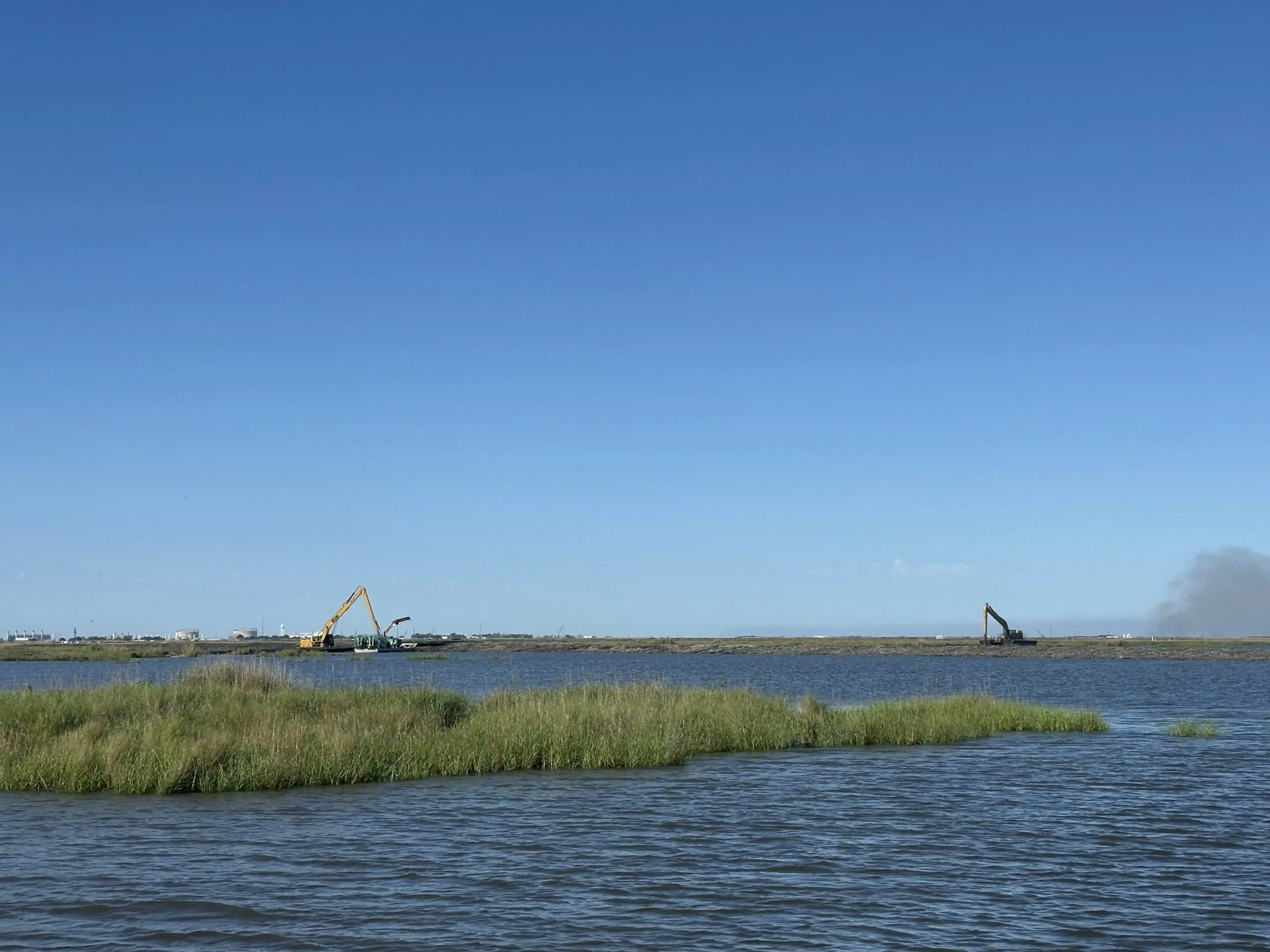
The one permanent thing about the coastal marsh, is it’s impermanence. The marsh is always changing, and through a combination of long term natural processes like erosion and subsidence, often accelerated by human activity, short term natural events like hurricanes, and also through direct human intervention, both intentional and not, much of the Louisiana marsh is disappearing.
I have over the years watched places that I held very dear change, transforming from broken “pothole” marsh too shallow to pole a skiff through, to mainly open water that bay boats could fish, only to ultimately be leveed off and filled in for the sake of coastal protection and restoration.
While I’ve often felt a pang of loss and regret when areas I enjoyed became part of a marsh reclamation project, I’ve tried to view it through the lens of a necessity to preserve the greater fishery. Recently however an area has been “reclaimed” that hit me harder than any other.
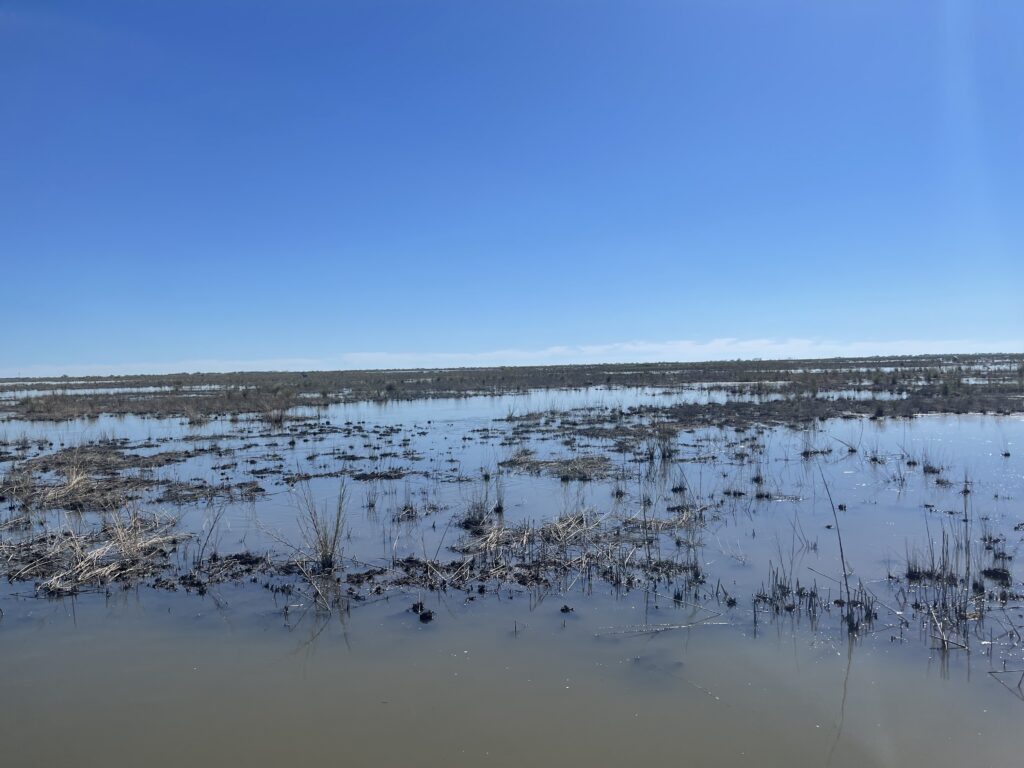
Many people who have fished with me over the years have seen an area known as “The Redfish Highway”. Getting to the “Redfish Highway” required a 9 mile run down the east side of Calcasieu Lake south of Lake Charles, Louisiana. After the open water trek down the lake a turn was made through the boat bay in the “Grand Bayou Weirs” granting entry into Cameron Prairie National Wildlife Refuge. Entering the refuge there were usually many boats off all shapes and sizes anchored near the weirs with fishermen soaking bait for redfish and speckled trout. Most of those fishermen had no idea that within a quarter to half mile of where they sat were shallow flats filled with aquatic grass and clear water that teemed with brightly colored redfish, often traveling in large schools.
Among my group of friend the Redfish Highway was first stumbled upon and named by my friend Wiley Huffman. One cold and gray day in the early 2000’s, Wiley was fishing with his dad who was visiting from New Mexico. Late in the morning Wiley reached out to me, they were having no luck, and he was looking for ideas on where to fish. He asked about the marsh in the refuge “behind the weirs”. It was still a bit earlier in the season than when that water normally turns on, but with little to lose my reply was something to the effect “can’t hurt”.
Later in the day Wiley called to let me know that they had stumbled onto fish and caught well. There was a shallow flat of newly opened marsh, too shallow to actually pole with the skiff, but with a tidal creek bed running through it. Wiley had poled the creek bed sniping fish that were up on the flat nearby, and that were moving down the channel of the creek bed, as Wiley described it, “like it was some kind of redfish highway”.
Wiley shared the location of the Redfish Highway with me, and over the years it grew to be my “home water” as much as any other place. It wasn’t long after his discovery of the highway that Wiley’s duties as an army officer took him elsewhere in the country and foreign lands, but I kept fishing the area.
Over the years many friends of mine have been introduced to saltwater fly fishing, or had the opportunity to hone their skills off the front of my boat at the Redfish Highway. Friendships have been grown and solidified there and I’ve even had the opportunity to fish the next generation of anglers there as friends of mine brought along their kids. My older brother Steve caught his first redfish on fly there, and I had many great days there with my kid. I have a catalog of memories forged at the Redfish Highway that I can recall with incredible clarity, seeing still in my mind’s eye the images of specific days spent with friends and even specific fish caught. The Redfish Highway is often where I often sought solace, taking solo trips there just to clear my head. In 2010, when the wheels were falling off of my marriage and I was distraught, trips there may be the one thing that held me together.
The Redfish Highway was an incredibly special place, and although is changed drastically over the years, transforming from very shallow and broken, to much deeper open water, it continued to hold fish and provide great fishing. So strong is my attachment to the Redfish Highway that I considered including a request in my will that when I die, my ashes be scattered in the area, with an addendum that my friends Mike and Barret help facilitate this, just so I can be a pain in their ass one last time.
A few days ago I got a text from my friend Barret. It was a recent satellite image of what was the Redfish Highway. It has now been leveed off and filled, ostensibly in the name of marsh restoration, but as likely in the name of having a convenient place to dump dredge material generated by the construction of a new LNG facility. I feel loss, but at least hold countless memories to hold onto. I still want to have my ashes scattered somewhere in the marsh, and still want that one last chance to trouble Mike and Barret, but wherever else I choose, it’s going to feel like “settling”.